The Skills We Build Through Music
Every session I deliver is intentionally designed to support children’s growth across the five key areas of early learning.
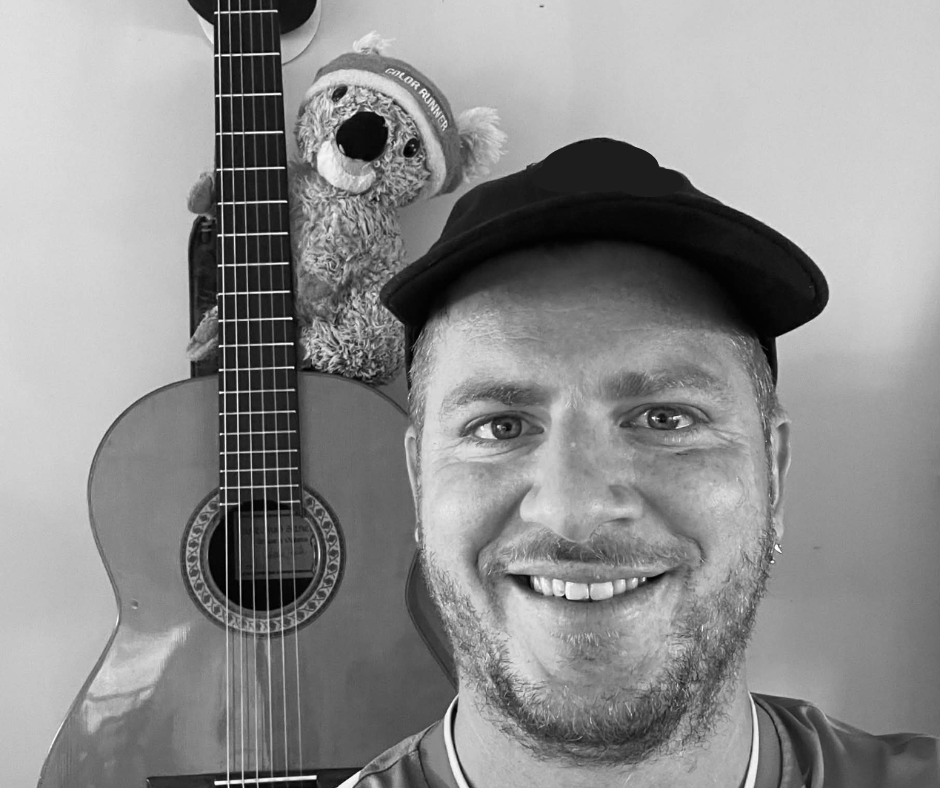
1. Building Confidence and Identity
In our sessions, this looks like…
Taking a turn on the lead bongo drum while everyone else keeps the beat.
Teaching Coach Koala a new dance move.
Adding your own lyric to a song we are making up on the spot.
When children step forward, share ideas, and hear their voice become part of the music, they begin to see themselves as capable, creative contributors.
That moment when Koala gets their name hilariously wrong and they confidently correct him?
That is identity building too.
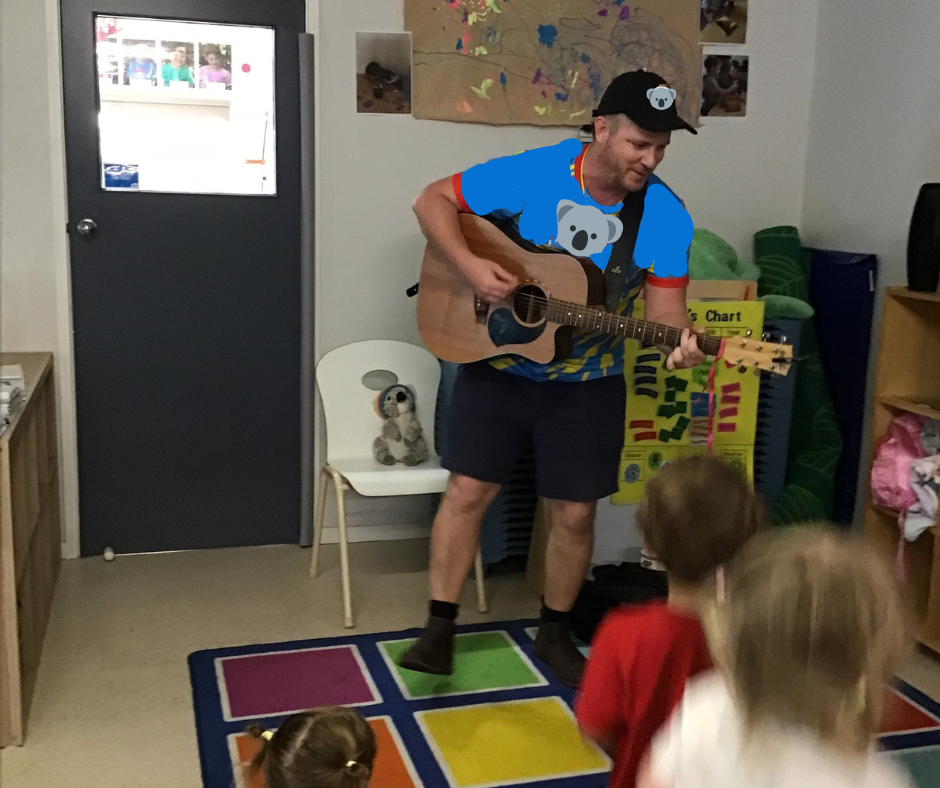
2. Connection and Contribution
In our sessions, this looks like…
Waiting patiently for your turn while cheering on a friend.
Keeping rhythm together as a group.
Working as a team to create a brand new song, complete with actions and dance moves.
Music teaches children that their contribution matters, but so does everyone else’s. Learning to enjoy someone else’s time to shine is just as important as having your own.
Every session becomes a shared experience, not just an activity.

3. Wellbeing and Emotional Awareness
In our sessions, this looks like…
Using rhythm to calm big feelings.
Talking about emotions before we turn them into a beat.
Laughing when Coach Koala attempts an over-the-top breakdance spin.
Music creates a safe space to explore feelings. Children learn that emotions are not something to hide. They are something we can talk about, sing about, move through and understand.
Structured routines provide security. Playful moments provide release. Together, they build regulation and resilience.
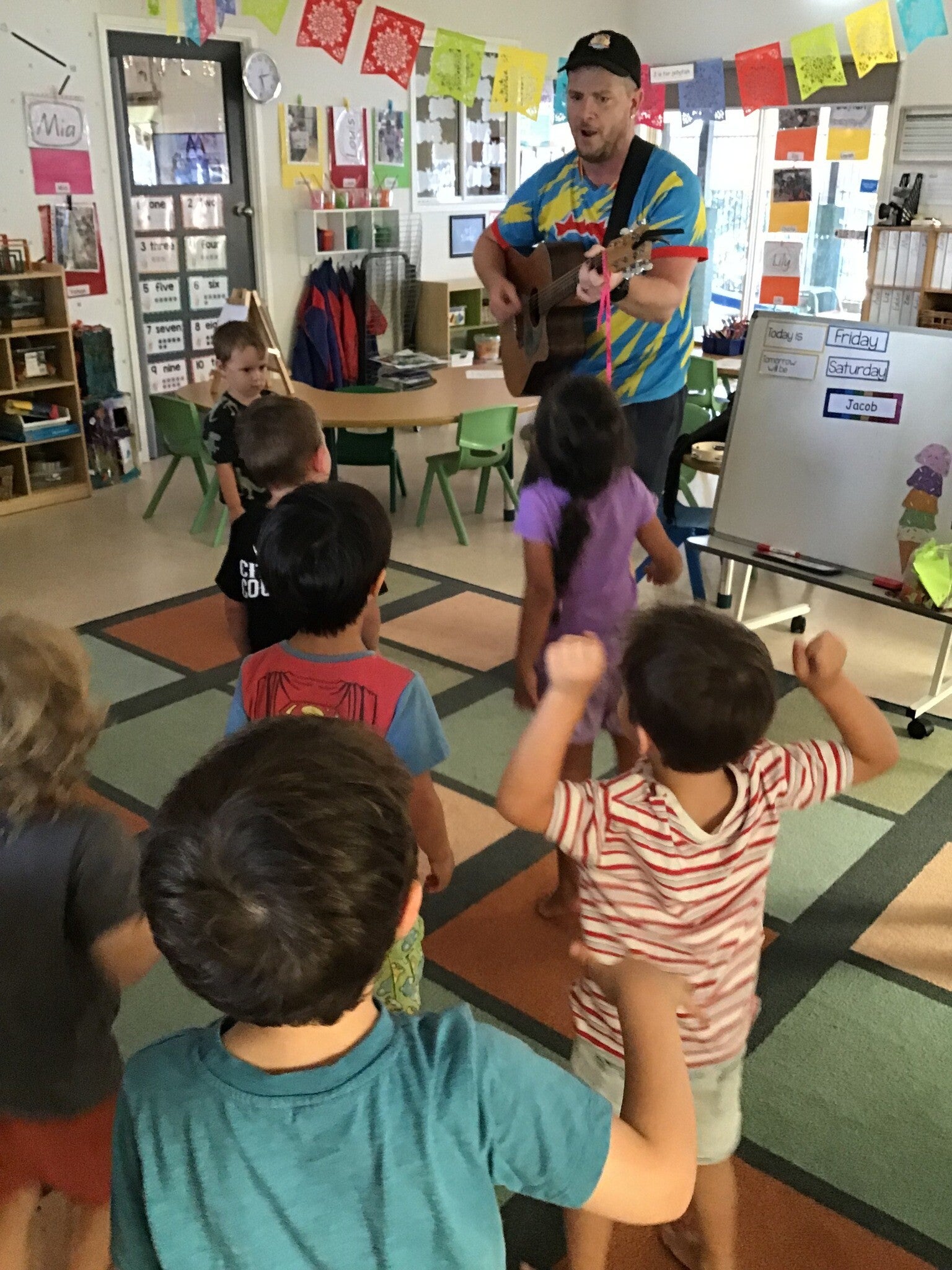
4. Confident and Involved Learning
In our sessions, this looks like…
Counting beats while playing the djembe.
Repeating a rhythm until it clicks.
Turning speech sounds into beatboxing patterns.
When children practise “boots and cats” style beatboxing, they are developing mouth coordination, breath control and phonemic awareness, all while thinking they are just having fun.
Music builds persistence.
It rewards effort.
And it turns practice into play.
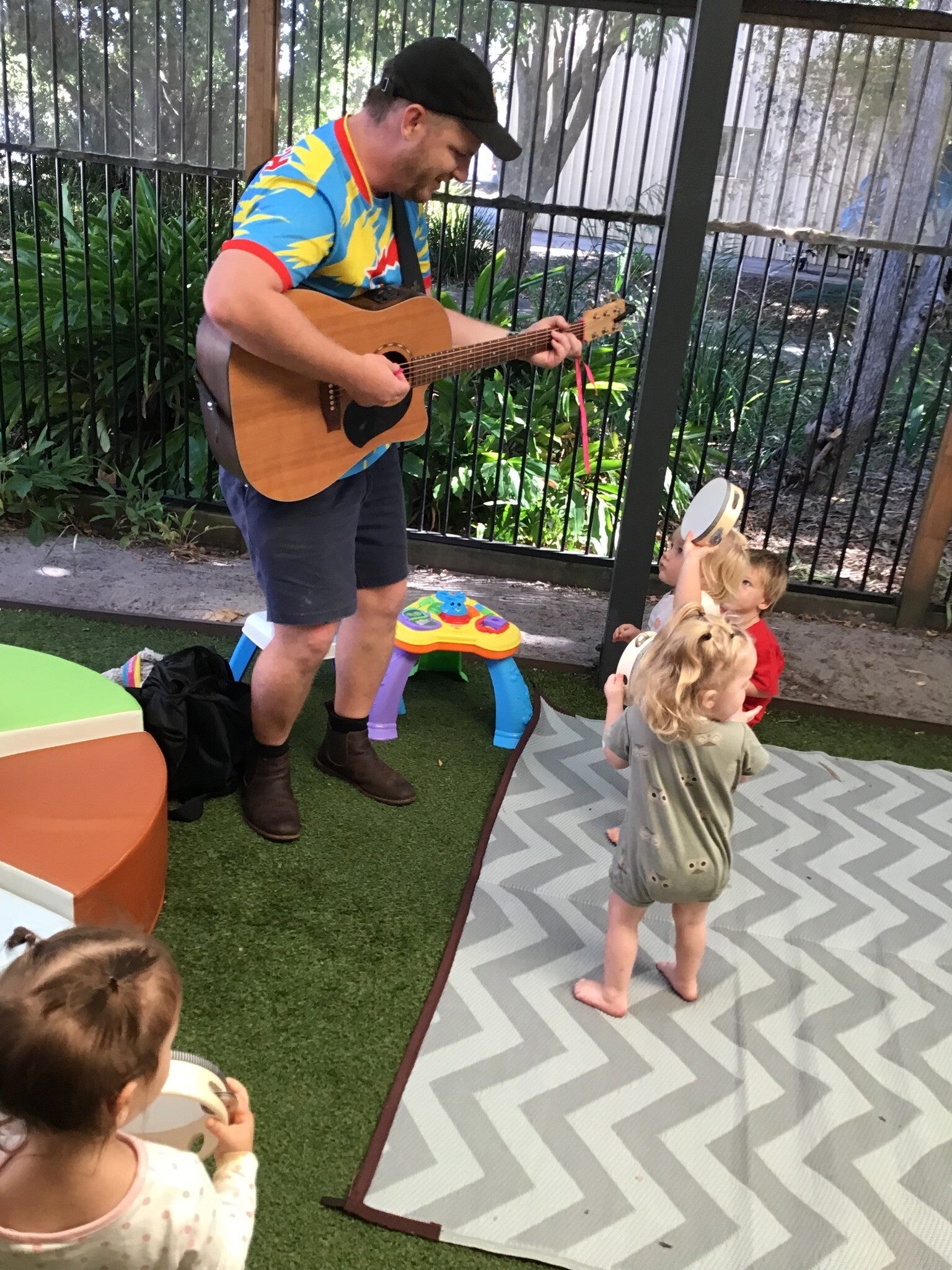
5. Effective Communication
In our sessions, this looks like…
Call-and-response singing.
Listening closely so the rhythm stays together.
Making up lyrics together and deciding which words fit the beat.
Children communicate through voice, sound, movement and expression. Some sing loudly. Some whisper. Some lead. Some observe before joining in.
All of it counts.
From spontaneous songwriting to Koala-led comedy moments, children practice expressing themselves clearly and listening to others with intention.
"Our children love Coach Brendan's sessions. So do our teachers, he knows how to read a room and is so sensitive to each child's individual needs"
Danielle - Centre Director
What has shaped me?
Coach Brendan and Koala is shaped by the music I grew up with, the artists I admire and the experiences that have influenced my teaching. The reflections below give you a deeper sense of that.
What kind of music do you love?
I genuinely love almost every genre of music.
From hip hop to rock, folk to classical, reggae to punk, I’m endlessly curious about sound and rhythm. That diversity naturally flows into my sessions, where children experience a wide range of musical styles and influences.
Some of my favourite artists include:
-
Paul Simon
-
Vampire Weekend
-
Hilltop Hoods
-
System of a Down
-
The Beatles
-
90s punk bands like Green Day and The Offspring
-
Oasis
-
The Mary Wallopers
-
The Saw Doctors
-
Bad Bunny
And honestly… so many more.
The common thread? Strong rhythm, storytelling and authenticity.
Who are your favourite children’s entertainers?
I deeply respect entertainers who combine creativity with heart and educational value.
Some favourites include:
-
The Vegetable Plot for their clever, musically rich songwriting
-
Bluey, which I genuinely believe is one of the greatest children’s shows ever made
-
Mister Rogers for modelling emotional intelligence and kindness
-
Sesame Street and Play School, which have shaped generations through play-based learning
What I admire most about all of them is this: they never talk down to children. They respect their intelligence, their emotions and their imagination.
That’s exactly how I approach every session.
Why beatboxing?
Because it works.
When my son was working to overcome a speech impediment, he found his traditional articulation exercises repetitive and disengaging. So we reframed them. We turned his speech homework into beatboxing patterns.
Suddenly, practice became play.
Beatboxing strengthens:
-
Mouth muscle coordination
-
Breath control
-
Rhythm awareness
-
Phonemic awareness
-
Confidence in vocal expression
Children don’t feel like they are “doing speech work.” They feel like they are learning something cool.
Beatboxing is rhythmic, structured and playful. It builds articulation, listening skills and timing, while also giving children a powerful sense of ownership over their voice.
And perhaps most importantly, it makes practice joyful.
